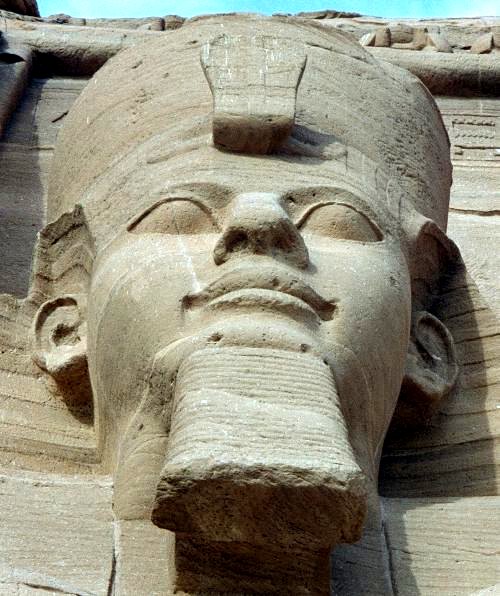
Egypt’s new de facto pharaoh, General Abdel-Fattah al-Sisi, is a man of mystery. Is he an Islamist, or a nationalist? Is he a person of high principle, or a lowly opportunist? And in a land which has known five thousand years of mainly centralized, one-man rule, with limited experience of democracy, when have we seen his type before, and where will he lead the troubled, ancient nation now?
These questions are crucial to knowing how the U.S. should react to al-Sisi’s removal of Egypt’s first “freely elected” president, Mohamed Morsi on July 3 in answer to overwhelmingly massive street protests demanding that he do so, and to the ongoing bloody crackdown on Morsi’s group, the Muslim Brotherhood (MB), that began on August 14. Citing the ongoing, actually two-way violence in Egypt, President Barack Obama’s administration has now suspended much of our annual $1.6 billion aid to the country, save for money needed to maintain security operations along the Israeli border in Sinai and to directly support the 1979 Egypt-Israel Peace Treaty.
Earlier, the administration had stopped the scheduled delivery of four out of twenty F-16s to Egypt, cancelled the bi-annual “Bright Star” joint training exercises that had been set for September, and launched a review of the bi-lateral relationship. There has now been a delay in paying the final $585 million tranche of this year’s aid package, pending that review, according to an October 9 report by the global strategic analysis firm, Stratfor.
However, the administration has been careful not to classify Morsi’s removal a “coup,” which under U.S. law would require an immediate cut-off of all of our aid to Egypt. That assistance is vital to the U.S.’ favored access to the Suez Canal, maintenance of the 1979 Egypt-Israel Peace Treaty and crucial bi-lateral security cooperation against international terrorism. Nonetheless, the latest move puts the entire alliance at great risk, and plays into popular demands that Egypt switch to a more independent stance, or even adopt Russia as chief military supplier instead of the U.S., an idea made more enticing by Washington’s apparent weakness in surrendering its interests in Syria to Moscow, and its seeming haste to make concessions to Cairo’s post-MB regional antagonist in Tehran over the latter’s nuclear program.
Yet along with a number of key Congressional leaders and most of the mainstream media, Obama has been far more critical of al-Sisi and his use of force against a group that our government wrongly supported while in power under the illusion that it was “moderate,” than they have been of the violence and mayhem of the MB.
Meanwhile, the MB’s “peaceful demonstrators” have been busy burning scores of Christian churches and schools along with hundreds of Christian businesses while attacking other citizens, museums and public buildings, the police and the army, and waging an open war against the state in Sinai and around the country. As the total number of deaths in the past nearly two months of confrontations climbs toward the thousands, the MB clearly hopes to use its own “martyrs” (as both sides call their fallen) to generate sympathy for their unaltered goal of restoring Morsi to power. So far, however, it’s not working. Despite a surge in turnout at demonstrations it organized to coincide with the State’s grand celebrations of the 40th anniversary of the 1973 war on October 6, fewer and fewer people have been joining its protests, which have been tiny compared to the unprecedentedly-huge demonstrations against the Islamists.
THE SECRET THESIS
But what besides the obvious hard realities pushed al-Sisi to act when he did? What does he believe, and what does he want? A quiet man known for saying little and keeping his own counsel, in his year of study at the U.S. Army War College in 2006, al-Sisi produced a research paper or brief thesis on his views of Islam and the state. That document was first exposed by Robert Springborg, an expert on Egypt’s military, in a July 28 article in Foreign Affairs.
Springborg predicted that al-Sisi, who has sworn to swiftly restore democracy after a nine-month transition, intends to keep real power for himself. Furthermore, Springborg warned of his “Islamist agenda,” saying that he would not likely restore the “secular authoritarianism” practiced by Mubarak, but would install “a hybrid regime that would combine Islamism with militarism.” Intriguingly, though it holds no state secrets, the document was classified, and was only released under a Freedom of Information Act request by Judicial Watch on August 8.
In it, al-Sisi declares, “There is hope for democracy in the Middle East over the long term; however, it may not be a model that follows a Western Template” (sic). By that, al-Sisi makes plain, he means that Middle Eastern democracy must be based not on secularism, but on Islam.
However, in an August 16 profile of the previously obscure general published by The Daily Beast by Mike Giglio and Christopher Dickey, those who know al-Sisi (few of whom will talk much about him) say that he grew up in a family that was both religiously conservative—not radical—but extremely nationalistic. And indeed it is that sense of nationalism which seems to have had the upper hand in motivating the actions he’s taken thus far.
The chaos, economic calamity, and political upheaval that have rocked Egyptian society since a much more limited popular uprising against longtime president Hosni Mubarak resulted in Mubarak’s ouster by the military on February 11, 2011 (at Obama’s thinly-veiled urging the night before)—and which led in part to al-Sisi’s move against Morsi—have all been seen before.
READ MORE at Foreign Policy Research Institute
 Flashback: Super Highway Completed And The Stench Of Death & Chaos Reigns From Iran To Africa
  The Stench of Death, Abomination & Devastation Coming From The Middle East & Africa
  Christ Was Not The First Palestinian Martyr He Is The Son Of God
  The Super Highway Of Terror Growing?
  I Am Not Ashamed Of The Gospel Of Christ!
This is still significant. According to the Bible Egypt’s riches are carried off by the Antichrist. But God does and will intervene, He will only allow man’s evil plans to go so far. God will save Egypt. This just show’s how close we really are. Praying for the People of Egypt. (Daniel 11:42)
LikeLike